

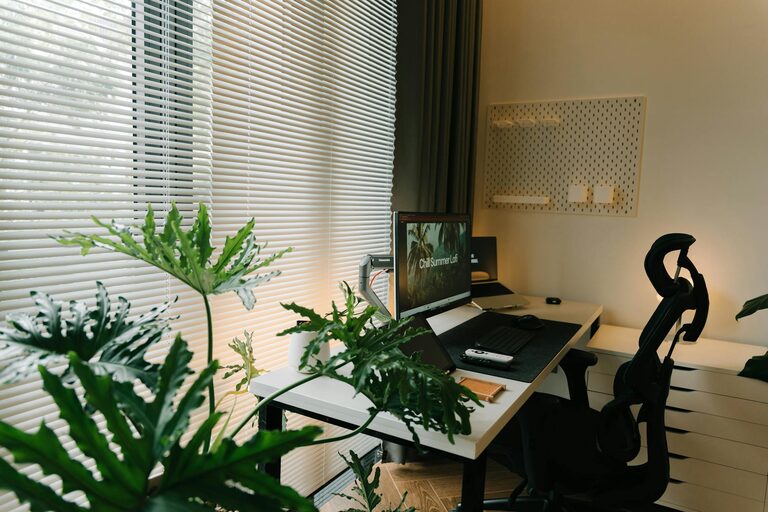
Creating a home office that is both relaxing and productive can significantly improve your work experience, especially if you spend many hours working from home. A well-designed space helps maintain focus, reduces stress, and encourages a healthy work routine. Whether you have a dedicated room or just a small corner, these tips will guide you in transforming your workspace into an inviting and efficient environment.
Choose the Right Location
Find a Quiet Spot
Selecting a quiet and comfortable area in your home is essential. Minimising distractions such as noise from household activities will help you concentrate better. If possible, choose a room with a door to separate work from personal life.
Natural Light Matters
Try to position your desk near a window. Natural light improves mood and alertness, reducing eye strain. If natural light is limited, consider using daylight bulbs to mimic its effects.
Invest in Comfortable Furniture
Ergonomic Chair and Desk
Investing in an ergonomic chair supports your posture and reduces back pain, making long working hours more comfortable. Pair it with a desk at the proper height to avoid strain on your wrists and shoulders.
Desk Organisation
A clutter-free desk is key to a productive environment. Use organisers, trays, or drawers to keep supplies in order and maintain a clean workspace.
Personalise Your Space
Colours and Decorations
Choose calming colours such as soft blues, greens, or neutrals for your walls or accessories to create a soothing atmosphere. Add personal touches like photos, plants, or artwork to make the space inviting.
Plants for Freshness
Indoor plants not only improve air quality but also enhance mood and creativity. Easy-to-care-for varieties like succulents or spider plants are ideal for a work environment.
Optimise Lighting and Technology
Balanced Lighting
Avoid harsh overhead lights or glare on your screen. Use a combination of ambient lighting and task lighting, like a desk lamp, for a balanced setup that reduces eye fatigue.
Reliable Technology
Ensure your computer, internet connection, and other devices are reliable and well-maintained to avoid frustration and delays.
Establish a Routine and Boundaries
Set Clear Work Hours
Define your working hours and stick to them. This helps separate work-time from relaxation, maintaining a healthy work-life balance.
Take Regular Breaks
Incorporate short breaks into your routine to stretch, walk around, or relax your eyes. Techniques like the Pomodoro method (working in focused intervals with breaks) can be very effective.
Keep It Organised and Clean
Daily Tidying
Spend a few minutes at the end of each day tidying your desk and organising papers or electronics. A neat environment reduces stress and saves time searching for materials.
File Management
Use both physical filing systems and digital folders to store important documents systematically. This helps keep your thoughts clear and improves efficiency.
Enhance Comfort with Temperature and Air Quality
Maintain a Comfortable Temperature
A room that is too hot or cold can distract you. Adjust your heating or cooling to a comfortable level.
Fresh Air Circulation
Opening a window periodically or using an air purifier can help maintain fresh air, increasing alertness and reducing fatigue.
Use Sound to Your Advantage
Background Noise
Some people find gentle background sounds, like soft music or nature sounds, helpful for focusing. Experiment to see what works for you.
Noise-Cancelling Tools
If you are in a noisy environment, noise-cancelling headphones can improve concentration.
—
Designing a home office that supports both relaxation and productivity takes some thought, but the benefits are well worth it. By selecting an appropriate location, investing in comfortable furniture, incorporating personal touches, and maintaining organisation, you create a space that not only boosts your work performance but also promotes wellbeing. Remember, the goal is to make your home office a place where you look forward to spending time each day.